
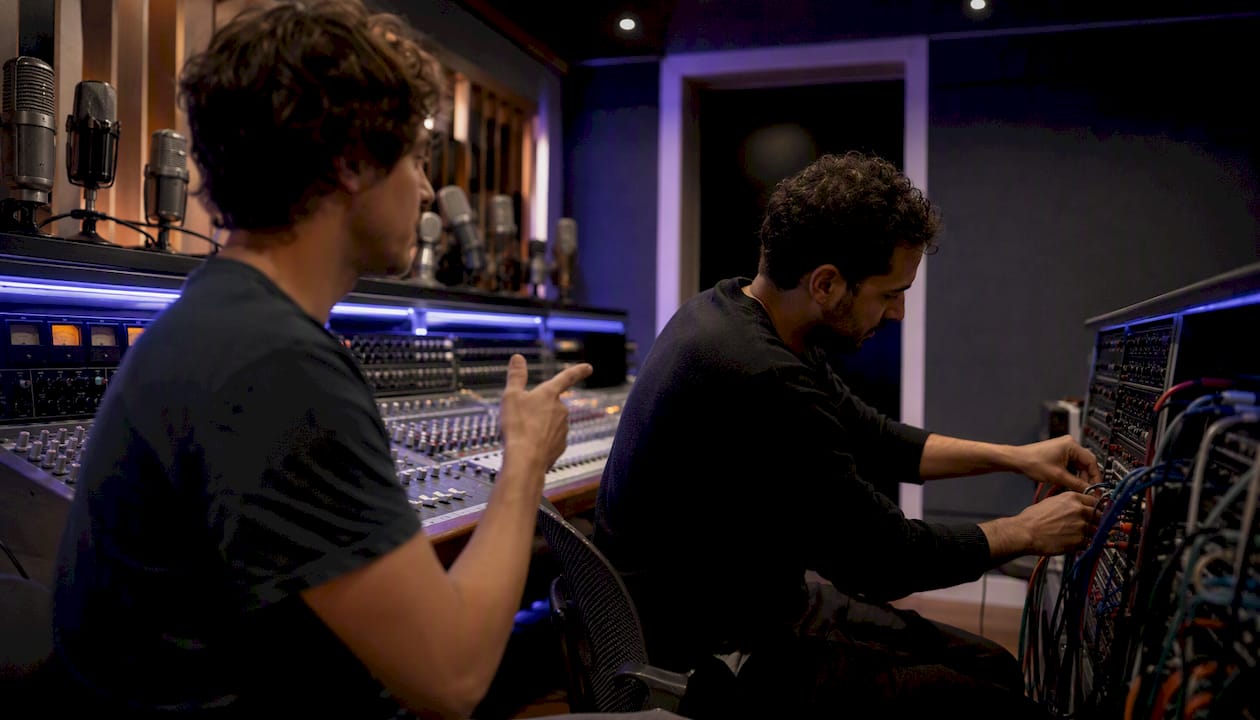
The producer leads creative decisions. The engineer captures and shapes the sound. That’s the core difference, and everything else flows from it.
Here’s what each role actually delivers:
- Music producer: creative vision, arrangement choices, performance coaching, song selection, budget and schedule oversight, final creative sign-off
- Audio engineer: mic selection and placement, gain staging, signal flow, session file organization, editing, and mixing basics
Later sections cover how they collaborate in a real session, when one person can handle both roles, what each career path looks like, and how to find the right collaborator for your project.
Key Takeaways
The producer leads creative decisions; the engineer leads technical execution. Knowing which role you need, or which one you are, shapes every hiring and career decision that follows.
| Point | Details |
|---|---|
| Producer vs. engineer core split | Producers own creative vision and performance; engineers own technical capture and signal chain. |
| When to hire separately | Split the roles on any project where budget allows; combined roles work best in home-studio or indie settings. |
| Compensation differs by role | Engineers typically bill hourly or per session; producers usually earn a flat fee plus 2–5% producer points. |
| Career entry routes | Both roles have degree, vocational, and self-taught paths; assistant and intern roles remain the fastest way in. |
| Find collaborators on Mykasu | Mykasu lets producers and engineers post reels, browse projects, and connect with vetted collaborators directly. |
Table of Contents
- What does a music producer do in a real session?
- What does an audio engineer actually handle?
- How producers and engineers work together in a session
- Skills, tools, and pay: producer vs. engineer compared
- Can one person be both producer and engineer?
- Career paths, job titles, and how pay actually works
- How to find the right producer or engineer for your project
- The role split is a creative decision, not just a budget one
- Mykasu connects you with the right music professionals
- Sources
What does a music producer do in a real session?
Berklee compares the producer to a film director: responsible for creative vision, personnel, budget, and schedule. That analogy holds up in practice. A producer walks into a session knowing what the song needs to become and works backward from that vision.
Day-to-day producer responsibilities include:
- Setting the creative direction before tracking begins (tempo, key, arrangement, reference tracks)
- Coaching vocal and instrumental performances, calling takes, and deciding when something is good enough
- Selecting and editing arrangements, sometimes rewriting sections on the fly
- Hiring session musicians, booking studio time, and managing the project budget
- Serving as the liaison between the artist and the label or distributor
The deliverables are less tangible than an engineer’s but no less real: a coherent sonic identity, a performance that connects, a finished record that sounds like a decision was made rather than a compromise.
In a vocal tracking session, a producer might ask for three takes of the chorus, identify the one with the right emotional weight, and then request a punch-in on a single word. The engineer executes the punch-in. The producer decides whether it worked.
Pro Tip: To hear a producer’s fingerprint on a finished track, listen for consistency of tone across an album. When every song feels like it belongs in the same world, that’s usually the producer’s hand at work, not the artist’s alone.
Indeed’s career guide notes that producers enter the field through multiple routes: musicianship, business training, or technical apprenticeships. What they share is taste and decisiveness.
What does an audio engineer actually handle?
Where the producer focuses on what a performance means, the engineer focuses on how it sounds on tape. O*NET classifies sound engineering technicians as professionals who assemble and operate equipment to record, synchronize, mix, edit, or reproduce sound. That definition covers a lot of ground.
Core audio engineer responsibilities:
- Selecting and placing microphones based on the source, room acoustics, and desired character
- Setting gain structure through the signal chain (mic, preamp, interface or console, DAW)
- Organizing session files, labeling tracks, and maintaining clean session architecture
- Editing recorded audio: comping takes, cleaning up timing, removing noise
- Building rough mixes so the producer and artist can evaluate performances in context
The tools engineers reach for most often include large-diaphragm condenser mics (like the Neumann U87 or AKG C414), dynamic mics (Shure SM7B, Sennheiser MD421), preamps, and DAWs such as Pro Tools, Logic Pro, or Ableton Live. Outboard gear like compressors and EQs, plus studio monitors calibrated to the room, round out a typical tracking rig.
Disc Makers draws the line clearly: the producer is the creative leader, the engineer is the technical operator. Both titles are essential. Neither is subordinate in terms of craft.
Pro Tip: Before a session, send your engineer a one-page brief: the genre, reference tracks, any known room or instrument quirks, and the DAW template you prefer. Engineers work faster when they’re not guessing your preferences at 10 AM.
How producers and engineers work together in a session
A typical commercial session moves through five phases, and the handoffs between producer and engineer define the pace of the whole project.
- Preproduction — The producer leads: song selection, arrangement decisions, demo creation, and reference track curation. The engineer may not be involved yet, but some producers bring them in early to flag technical constraints (room size, instrument bleed, headphone mix needs).
- Session setup — The engineer takes over: mic placement, gain staging, routing, headphone mix, and DAW template prep. This is the engineer’s domain entirely. A good engineer has the room ready before the artist walks in.
- Tracking — Roles split cleanly. The producer sits at the console or in the control room coaching the performance. The engineer monitors levels, adjusts mic placement between takes, and flags technical problems (clipping, phase issues, room noise) without interrupting the creative flow.
- Overdubs and editing — The producer decides what’s needed; the engineer executes the punches, comps the best takes, and organizes the session for the next phase.
- Mixing and mastering — Often handled by a separate mix engineer and mastering engineer. Splitting these tasks across specialists reduces tunnel hearing and brings fresh ears to the final stages, which is standard practice on commercial projects.
Session setup checklist the engineer owns:
- Mic selection and placement confirmed
- Gain structure set with no clipping on loud transients
- Headphone mixes built for each performer
- Session file labeled, organized, and backed up
- Talkback and monitoring routing tested
When one person wears both hats mid-session, they typically handle setup first, then shift into producer mode once the room is ready. The transition point matters: Violet Recording’s session guide notes that the producer shapes the song while the engineer shapes the sound, and conflating those tasks in real time is where sessions lose focus.
Skills, tools, and pay: producer vs. engineer compared
| Dimension | Music Producer | Audio Engineer |
|---|---|---|
| Primary focus | Creative vision, arrangement, performance | Technical capture, signal chain, editing |
| Core skills | Musicianship, communication, taste, budgeting | Acoustics, gain staging, DAW fluency, ear training |
| Typical software | Ableton Live, Logic Pro, FL Studio, Splice | Pro Tools, Logic Pro, Reaper, iZotope RX |
| Gear emphasis | MIDI controllers, soft synths, reference monitors | Microphones, preamps, outboard compressors, monitors |
| Compensation model | Producer points (2–5% of royalties), advances, flat fees | Hourly or day rates, session fees, sometimes royalty splits |
| Education routes | Music school, self-taught, apprenticeship, artist career | Audio engineering degree, vocational program, assistant roles |
| When to hire a specialist | Budget allows; project needs clear creative direction | Any time you’re tracking live instruments or vocals |
Fastest ways to build each skill set:
- Producers: Study arrangement by deconstructing reference tracks in a DAW. Volunteer to produce demos for local artists. Learn to communicate musical ideas without jargon.
- Engineers: Log hours behind a console or in a DAW. Study mic placement through A/B recording tests. Assist at a studio, even unpaid, to absorb session workflow.
Pro Tip: When auditioning for either role, lead with a specific example: “I produced the arrangement on this track, here’s what I changed and why” or “I recorded this session with a Royer R-121 on the guitar cab because the room was bright.” Specificity signals real experience faster than a long resume.
Can one person be both producer and engineer?
Yes, and it’s common. Bedroom producers, indie artists, and solo beatmakers handle both roles every day. The question isn’t whether it’s possible. It’s whether it’s the right call for your project.
Pros of the hybrid approach:
- Lower cost: one person, one rate
- Creative continuity: no translation loss between vision and execution
- Faster iteration: no waiting for an engineer to implement a producer’s idea
Cons:
- Divided attention during tracking: you can’t coach a performance and monitor gain structure simultaneously with full focus
- Technical compromises: producers who self-engineer sometimes miss subtle phase issues or room problems that a dedicated engineer would catch immediately
- Fatigue: switching between creative and analytical mindsets across a long session is genuinely draining
Separating producer and engineer is standard in professional studios precisely because each role benefits from undivided attention. On a major-label record, you’ll typically see a producer, a tracking engineer, a mix engineer, and a mastering engineer as four distinct people.
Common modern patterns on indie and mid-level projects:
- Producer-engineer: one person handles both, common in home studios and hip-hop production
- Artist-producer-engineer: the artist produces and engineers their own work (common in electronic music)
- Beatmaker + tracking engineer + mix engineer: the beatmaker creates the instrumental, a tracking engineer records vocals, a mix engineer finishes the record
Pro Tip: If you’re freelancing as both producer and engineer, schedule them as separate blocks. Produce and arrange in the morning. Engineer and mix in the afternoon or the next day. The cognitive separation pays off in better decisions on both sides.
Career paths, job titles, and how pay actually works
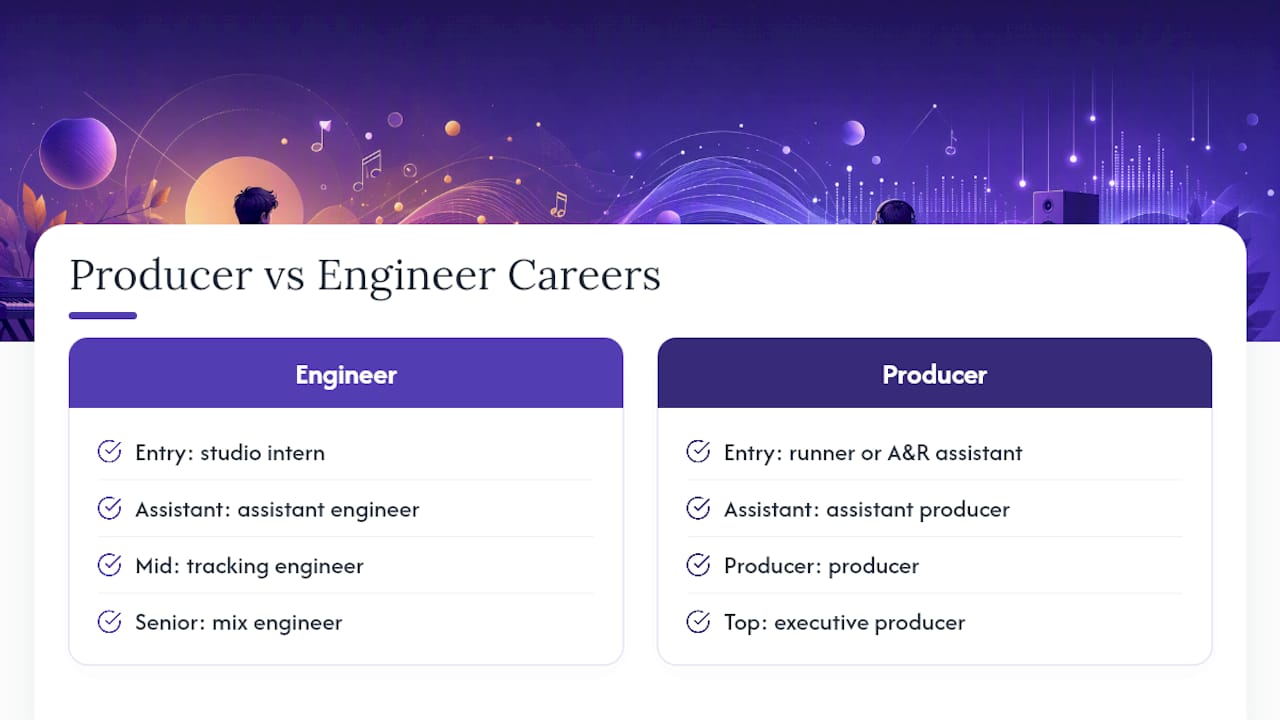
The engineering ladder typically runs: studio intern → assistant engineer → tracking engineer → mix engineer → mastering engineer. The production ladder looks like: runner or A&R assistant → assistant producer → producer → executive producer.
Training routes vary. Berklee, Full Sail, and SAE Institute offer degree programs in music production and audio engineering. Vocational paths through schools like ESP and community college audio programs provide faster, lower-cost entry. Many working engineers and producers are self-taught, building skills through DAW study, YouTube, and years of unpaid sessions.
Compensation models differ significantly between roles. Engineers typically bill by the hour or by the session day. Disc Makers notes that executive producer credits often reflect financing rather than hands-on creative work, which matters when you’re reading a contract.
Pro Tip: Negotiate credits and points before the session starts, not after the record is finished. A simple one-page agreement covering your credit, your points percentage, and your fee protects everyone and avoids the awkward conversation six months later when the track gets placed.
How to find the right producer or engineer for your project
Define the project before you start searching. A vague brief (“I need someone to make my EP sound good”) wastes everyone’s time. A specific one (“I’m recording four indie-folk songs, acoustic guitar and vocals, targeting a Phoebe Bridgers reference, budget $1,500, timeline six weeks”) gets you useful responses fast.
Practical checklist for hiring:
- Write a one-paragraph project brief with genre, reference tracks, timeline, and budget
- Request session reels or stems, not just finished mixes (stems reveal technical decisions)
- Run a paid test session or short audition before committing to a full project
- Evaluate session organization: clean file naming and labeled tracks signal professionalism
- Ask about their signal chain and DAW preference to gauge technical fluency
When reviewing an engineer’s reel, listen for clarity in the low-mids and whether the stereo image feels natural. When reviewing a producer’s work, ask whether the arrangements serve the song or just sound impressive in isolation.
Pro Tip: In a discovery call, ask: “Tell me about a session that didn’t go as planned and how you handled it.” The answer reveals more about professionalism and problem-solving than any portfolio.
Mykasu is built specifically for this kind of search. Music professionals can create profiles, upload reels and stems, post paid gig opportunities, and browse collaborators by role and specialty. For producers and engineers looking to connect with the right projects, and for artists trying to find vetted collaborators, a targeted platform cuts through the noise that general job boards create.
The role split is a creative decision, not just a budget one
The conventional wisdom treats hiring a separate producer and engineer as a luxury for bigger budgets. That framing misses the point. The real reason to split the roles is cognitive, not financial.
A producer who is also running the session technically is making two kinds of decisions simultaneously: “Is this performance emotionally right?” and “Is the gain structure clean?” Those are different parts of the brain. When you force one person to answer both questions in real time, one of them gets a worse answer. Usually it’s the creative one, because technical problems are louder and more urgent.
The best sessions I’ve seen, regardless of budget, had one person whose only job was to listen to the performance and decide whether it was true. That clarity of focus is what the producer-engineer split actually buys you. The money is secondary.
Mykasu connects you with the right music professionals
Finding a producer or engineer who fits your project used to mean cold emails, word-of-mouth referrals, and a lot of wasted discovery calls. Mykasu changes that by giving music professionals a dedicated space to showcase their work, post opportunities, and connect with the right collaborators directly.
On Mykasu, you can create a profile that highlights your role and specialty, upload session reels or stems so your work speaks before you do, and post paid auditions or gig opportunities to attract qualified candidates. Producers and engineers already using the platform can browse projects that match their style and budget range, cutting the time between “I need someone” and “I found the right person.”
Head to Mykasu to set up your profile and start connecting with producers, engineers, and artists who are actively looking for collaborators right now.
Sources
These are the primary sources referenced throughout this article, plus suggested starting points for deeper study:
- What’s the Difference Between Audio Engineers and Music Producers?
- Music Producer | Berklee
- What is a Music Producer and Music Engineer? | Disc Makers
- Music Production Roles and Careers: Producers, Engineers, and Beyond | Music Production Authority
- O*NET: 27-4014.00 Sound Engineering Technicians
For credentials and course recommendations, consult school pages at Berklee, Full Sail, and SAE Institute, and use O*NET’s job summary for writing accurate job postings or building a career plan.